Scalability of Virtual Production for Indie Filmmakers
The Myth of “Big Budget Only” Virtual Production
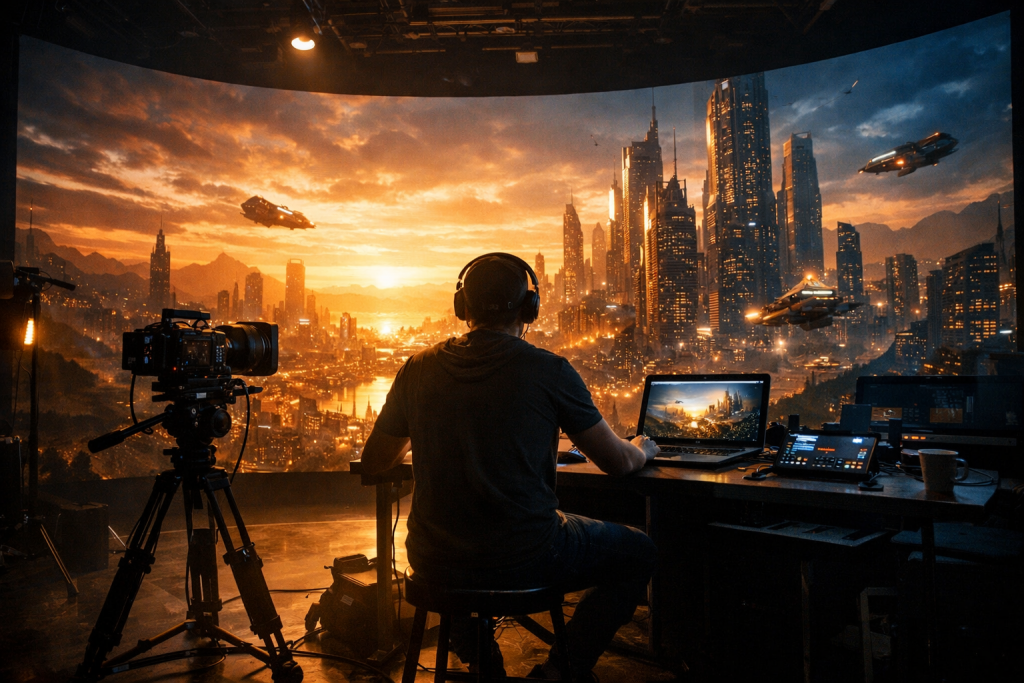
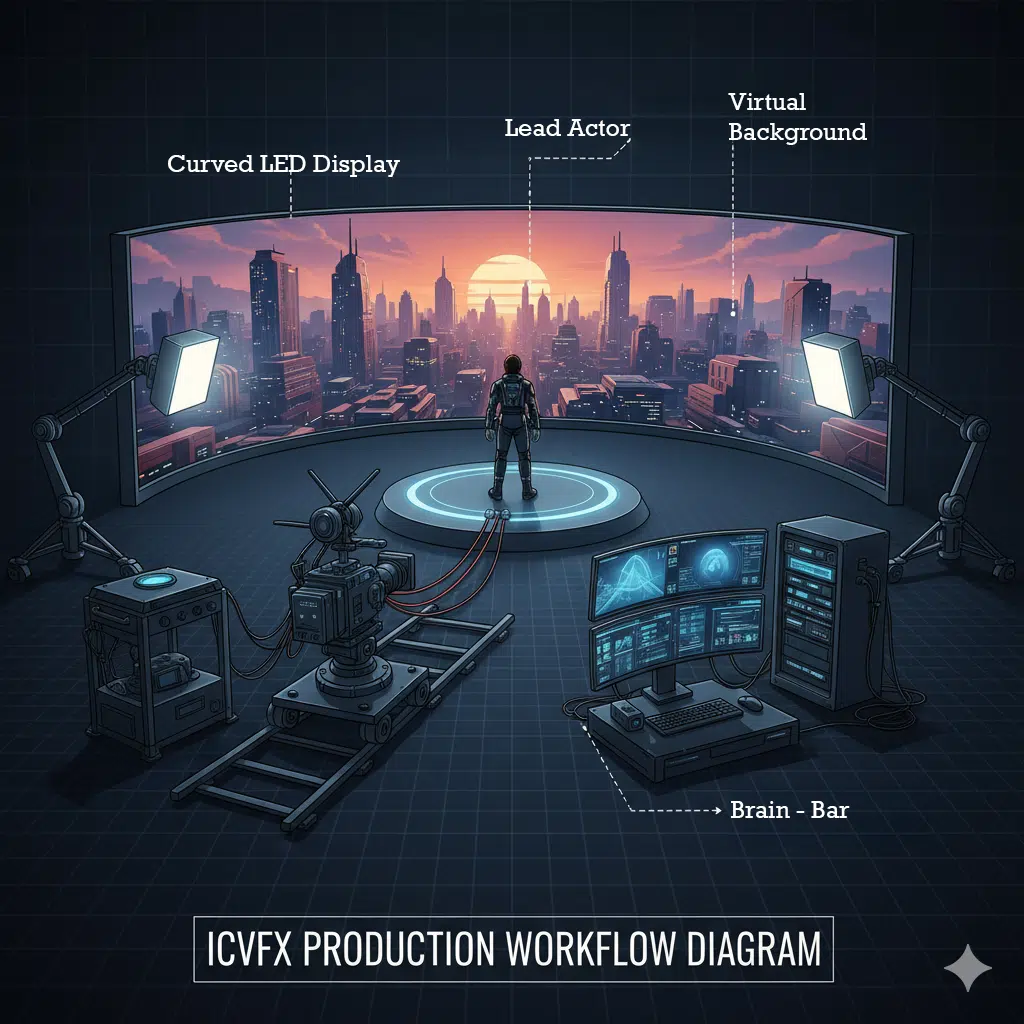
Virtual Production has often been portrayed as a playground for blockbuster studios–towering LED volumes, massive render clusters, and budgets that could bankroll entire indie film careers. But the reality is transforming. Beneath the high-end spectacle lies a flexible and modular toolset that adapts easily to small teams and small budgets. VP isn’t a monolithic technology; it’s a layered workflow that indie filmmakers can scale one piece at a time, using only what their story requires.
CONNECT WITH US
Why Scalability Matters for Independent Filmmakers
Modular VP Technology: A Toolkit, Not a System
The biggest advantage of Virtual Production is modularity. Each component- Unreal Engine, LED walls, camera tracking, virtual cameras, in-camera VFX, can be adopted individually. An indie filmmaker can choose to use VP for previs only, or for live environments, or for lighting enhancement with small LED panels. The technology stretches or shrinks to meet the demands of the project, making it inherently budget-friendly.
Unreal Engine: The Democratizer of Digital Worlds
The rise of Unreal Engine as a free, world-class real-time engine is one of the biggest reasons VP is now accessible to indie filmmakers. With its library of cinematic tools, photorealistic Fab marketplace environments, and virtual camera systems, Unreal allows creators to build detailed worlds without a dedicated 3D modeling team. Indie films can now feature expansive deserts, futuristic cities, or lush forests entirely inside a laptop- no location fees, no travel, no weather delays.
Affordable Camera Tracking and Virtual Cameras
Camera tracking was once the barrier keeping indie creators out of real-time filmmaking. Today, affordable solutions like Vive Mars, smartphone-based tracking systems, and optical marker setups make parallax-accurate VP achievable on modest budgets. Even accessible mocap tools from Rokoko enable virtual camera movements and digital character animation at a fraction of traditional costs.
LED Walls Don’t Have to Be Large to Be Effective
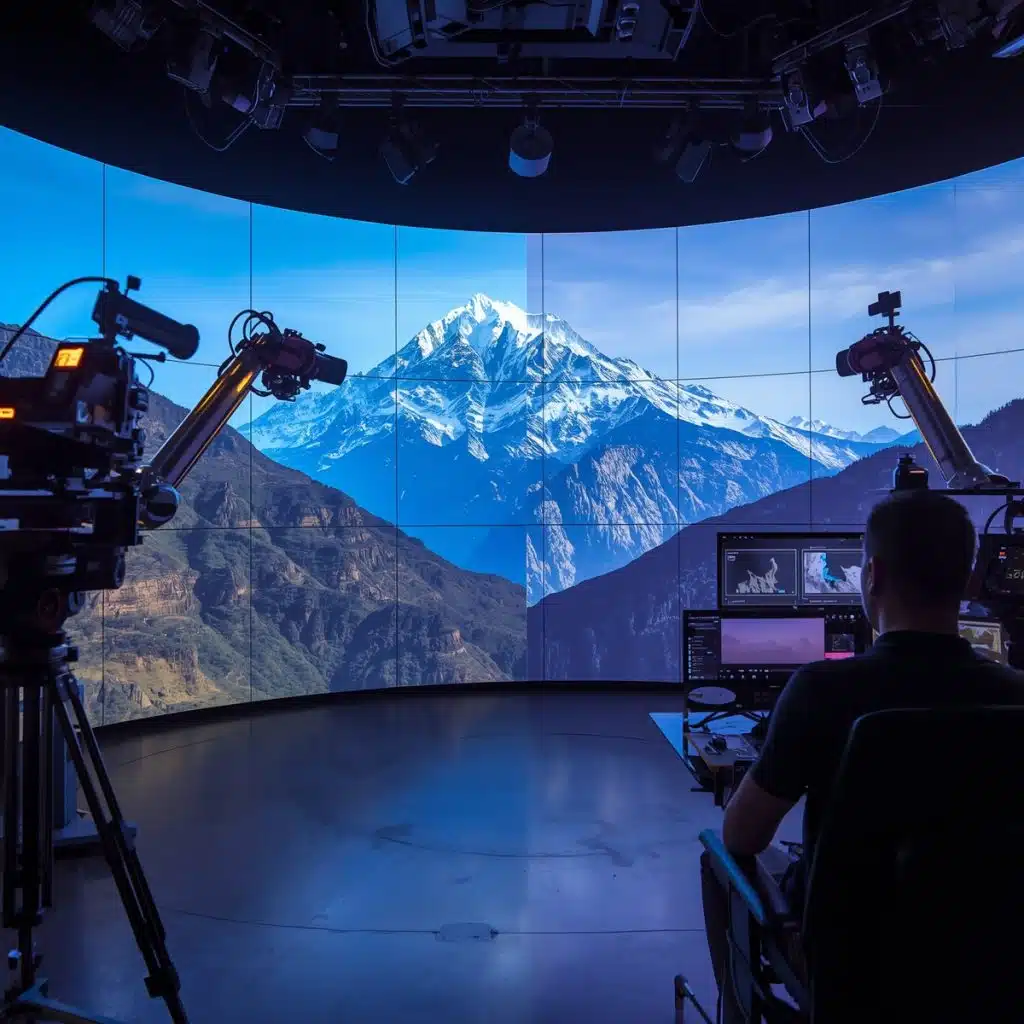
While a full LED volume may be out of reach, indie filmmakers have several scalable alternatives. Renting compact LED stages by the hour, using smaller LED tiles for lighting and reflections, or even placing backgrounds on large-format televisions for close-up shots are all viable approaches. For wide shots, green screens combined with real-time compositing and HDRI-driven reflections offer a cost-effective way to blend digital and physical worlds without sacrificing realism.
A Leaner, Smarter VP Crew for Indie Sets
Traditional filmmaking often requires large art departments, multiple lighting teams, and extensive location support. Virtual Production centralizes many of these responsibilities. A lean VP crew, consisting of a DP, Unreal Engine operator, a couple of lighting technicians, and an optional tracking specialist can run an entire virtual set. Environment changes take seconds, not hours, reducing overtime and shortening shooting schedules dramatically.
Hybrid Virtual Production: The Indie Sweet Spot
The hybrid approach, using a combination of LED lighting, green screen backgrounds, practical props, and virtual set extensions, is ideal for budget-conscious productions. LED provides natural light and reflections; green screen provides flexibility. This combination allows indie filmmakers to maintain high visual fidelity while controlling costs, making it the preferred workflow for many emerging creators.
Growing Access Through Shared Spaces and VP Communities
Virtual Production is becoming more reachable thanks to shared VP hubs, film school facilities, pay-per-hour LED studios, and training ecosystems like The Virtual Production Academy (TVPA). These collaborative environments offer indie filmmakers access to tools, stages, and expertise without requiring investment in infrastructure. This shared-access model is accelerating VP adoption at the grassroots level.
Limitations and How Indie Creators Overcome Them
VP does carry limitations, especially at smaller scales- restricted camera movement, lower-cost tracking precision, and hardware constraints. Yet indie filmmakers compensate with smart techniques: locked-off shots, simplified environments, controlled lighting, marketplace assets, and strong narrative focus. The key is embracing creativity over complexity, letting the story drive the technology.
Conclusion
Virtual Production has evolved from a high-budget innovation into a flexible, scalable filmmaking toolset that empowers independent creators to dream big without breaking the bank. It enables indies to shoot worlds they could never afford, solve production challenges with intelligent workflows, and build immersive stories using Unreal Engine, compact LED setups, and hybrid techniques. VP doesn’t just scale financially- it scales creatively, giving indie filmmakers the freedom to operate at a cinematic level once reserved for large studios.
At TVPA, we give indie filmmakers the skills, tools, and real-world workflows to harness Virtual Production at any scale- proving that world-class storytelling isn’t about budget, it’s about empowerment.
Come and explore with us.
RECENT POSTS